Pressure is a fundamental concept in physics and engineering, playing a vital role in our daily lives, industrial operations, and scientific research. From checking a car’s tire pressure to monitoring atmospheric changes or controlling hydraulic machinery, pressure units are essential for measuring and interpreting how force is distributed over an area. Without a clear understanding of pressure and its associated units, engineers, technicians, and even everyday users risk miscalculating values that can impact safety, efficiency, and performance.
At its core, pressure is defined as the amount of force exerted per unit area. However, the way this pressure is measured can vary significantly across regions and industries. In the metric system, pressure is typically measured in pascals (Pa), while in the imperial system, the pounds per square inch (psi) unit is commonly used. Meanwhile, other units such as bar, atmosphere (atm), Torr, and millimeters of mercury (mmHg) serve specialized roles in scientific, medical, and industrial contexts.
The diversity of pressure units exists due to historical developments, regional preferences, and the specific needs of various applications. For instance, meteorologists often use millibar or hectopascal to describe atmospheric pressure, while engineers working with hydraulic systems rely heavily on psi or bar. As industries globalize and more systems become interconnected, the ability to understand and convert between these pressure units has become more important than ever.
This comprehensive guide aims to explain what pressure is, why different units exist, and how they are used in real-world settings. We will cover the definitions, origins, and applications of the most common pressure units and provide practical guidance on how to convert between them accurately. Whether you’re a student, technician, or industry professional, this article will give you the knowledge needed to confidently work with pressure measurements across a wide range of disciplines.
1. Why You Need to Understand Pressure Units
1. Safety
Incorrect interpretation of pressure units can lead to dangerous situations:
-
Over-pressurizing a system can cause leaks, explosions, or equipment failure.
-
In medicine, inaccurate readings (e.g., in mmHg) can lead to misdiagnosis or improper treatment.
2. Accuracy in Engineering and Design
Designs for hydraulic systems, pressure vessels, and pneumatic equipment rely on precise pressure values. Using the wrong unit (e.g., confusing psi with Pa) can:
-
Result in structural failure
-
Make calculations invalid
-
Compromise product performance
3. Effective Communication
Different regions and industries use different units:
-
U.S. uses psi
-
Europe favors bar
-
Scientific communities use Pa
Understanding all pressure units ensures clear communication between teams, suppliers, and clients worldwide.
4. Compliance with Standards
Many industries are governed by strict standards:
-
ASME, ISO, and FDA regulations often specify pressure thresholds and require units like Pa, MPa, or psi.
-
Misusing units can result in regulatory violations or audit failures.
5. Data Conversion and Integration
In an era of global data exchange, IoT, and automation:
-
Devices may output pressure data in one unit (e.g., kPa) while your system expects another (e.g., psi).
-
Understanding pressure units allows seamless data integration across platforms and systems.
6. Everyday Applications
Even outside technical fields, pressure units matter:
-
Tire inflation (psi or bar)
-
Scuba diving (bar)
-
Blood pressure (mmHg)
Knowing what these units mean helps you stay informed and safe in everyday tasks.
2. What Is Pressure?
Pressure is a physical quantity that describes the force applied per unit area. It is a scalar measurement, meaning it has magnitude but no direction. The formula for pressure is:
Pressure=AreaForce
Where:
-
Force is typically measured in newtons (N),
-
Area is in square meters (m²),
-
and the resulting pressure is measured in pascals (Pa).
2.1 Understanding the Concept Physically
Imagine standing barefoot on the ground. The pressure your body exerts is distributed across the area of your feet. If you wear high heels, the same body weight is now distributed over a smaller area, resulting in higher pressure. This basic idea applies in many scientific and industrial settings, from gases in a cylinder to fluid in a pipeline.
2.2 Absolute, Gauge, and Differential Pressure

There are three main types of pressure measurements, and understanding the differences is critical:
-
Absolute Pressure
-
Measured relative to a perfect vacuum (0 pressure reference).
-
Common in scientific calculations.
-
Unit: psi absolute (psia), kPa absolute (kPaa).
-
-
Gauge Pressure
-
Measured relative to atmospheric pressure (i.e., the pressure of the surrounding air).
-
This is what most pressure gauges display.
-
Unit: psi gauge (psig), bar gauge (barg).
-
-
Differential Pressure
-
The difference between two pressure readings.
-
Common in filtration, fluid dynamics, and HVAC systems.
-
Example:
If a tire gauge reads 32 psi, it means 32 psi above atmospheric pressure. The actual absolute pressure in the tire is about 46.7 psi, considering atmospheric pressure is approximately 14.7 psi.
2.3 Pressure in Different Mediums
-
Gases: Pressure results from molecular collisions with container walls (ideal gas law).
-
Liquids: Pressure increases with depth due to gravity (hydrostatic pressure).
-
Solids: Pressure is generally distributed across contact surfaces.
2.4 Importance in Engineering and Science
-
In fluid mechanics, pressure determines how liquids and gases flow.
-
In mechanical systems, pressure controls actuators, valves, and seals.
-
In chemistry, pressure affects reaction rates and equilibrium.
-
In meteorology, pressure drives wind patterns and weather systems.
Understanding pressure is the foundation for mastering its units. In the next section, we’ll categorize and explore the various pressure units used around the world.
3. Categories of Pressure Units
Because pressure is used across many scientific, industrial, and everyday contexts, various pressure units have evolved to meet different needs. These units can be grouped into several broad categories based on their origin, application, and the measurement systems they belong to.
3.1 SI Units (International System of Units)
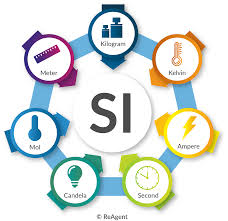
The SI system (Système International d’Unités) is the modern metric system used globally in science and engineering. The SI unit for pressure is the pascal (Pa).
-
1 pascal (Pa) = 1 newton per square meter (N/m²)
-
Multiples of the pascal commonly used include:
-
kilopascal (kPa) = 1,000 Pa
-
megapascal (MPa) = 1,000,000 Pa
-
gigapascal (GPa) = 1,000,000,000 Pa
-
Pascal is the most widely adopted pressure unit in scientific literature, physics, and engineering standards.
3.2 Metric System Units (Non-SI but accepted)
While the SI system prefers the pascal, other metric-based units are still widely used in practice:
-
bar: 1 bar = 100,000 Pa
-
Used in meteorology, scuba diving, and automotive applications.
-
-
millibar (mbar) or hectopascal (hPa):
-
1 mbar = 100 Pa
-
1 hPa = 100 Pa
-
Common in weather reports, especially in Europe.
-
These units simplify pressure values into more readable figures compared to pascals for everyday applications.
3.3 Imperial and U.S. Customary Units
Primarily used in the United States and some legacy systems:
-
psi (pounds per square inch):
-
1 psi ≈ 6,894.76 Pa
-
Standard in automotive, aerospace, and HVAC industries.
-
-
psf (pounds per square foot):
-
1 psf ≈ 47.88 Pa
-
Less common, typically found in structural engineering.
-
-
inHg (inches of mercury):
-
1 inHg ≈ 3,386.39 Pa
-
Still used in aviation and weather instrumentation.
-
3.4 Scientific and Laboratory Units
These units are often used in controlled environments, such as labs and scientific instruments:
-
atmosphere (atm):
-
1 atm = 101,325 Pa
-
Represents the average atmospheric pressure at sea level.
-
-
Torr:
-
1 Torr = 1/760 atm ≈ 133.322 Pa
-
Common in vacuum measurement.
-
-
mmHg (millimeters of mercury):
-
Used in medicine (e.g., blood pressure readings).
-
1 mmHg ≈ 133.322 Pa
-
3.5 Industry-Specific Units
Some fields or regions adopt specialized units tailored to their operations:
-
Technical atmosphere (at):
-
1 at = 98,066.5 Pa
-
Legacy unit in Europe and Russian technical literature.
-
-
kgf/cm² (kilogram-force per square centimeter):
-
1 kgf/cm² ≈ 98,066.5 Pa
-
Found in older equipment manuals and pressure gauges in Asia.
-
3.6 Summary Table of Pressure Units
| Unit | Symbol | Equivalent in Pa | Common Uses |
|---|---|---|---|
| Pascal | Pa | 1 Pa | SI standard in engineering |
| Bar | bar | 100,000 Pa | Automotive, scuba, European gauges |
| Atmosphere | atm | 101,325 Pa | Chemistry, thermodynamics |
| psi | psi | 6,894.76 Pa | U.S. industry, HVAC, tires |
| Torr | Torr | 133.322 Pa | Vacuum systems, labs |
| mmHg | mmHg | 133.322 Pa | Medical field, blood pressure |
| inHg | inHg | 3,386.39 Pa | Aviation, weather systems |
4. SI Unit of Pressure: The Pascal (Pa)
The pascal (Pa) is the International System of Units (SI) standard for measuring pressure. It is named after Blaise Pascal, a 17th-century French mathematician and physicist who made pioneering contributions to the study of fluid mechanics and pressure.
4.1 Definition of Pascal
One pascal is defined as one newton of force applied evenly over an area of one square meter:
1Pa=1N/m2
This definition aligns directly with the basic pressure formula:
Pressure=Area (m2)Force (N)
Although the pascal is the official SI unit, its base value is relatively small. For example:
-
The pressure of a typical car tire is about 200,000 Pa, or 200 kPa
-
The pressure of Earth’s atmosphere at sea level is approximately 101,325 Pa, or 101.325 kPa
4.2 Multiples and Submultiples of Pascal
Because pascals are small, larger or smaller units are commonly used depending on the application:
| Unit | Symbol | Value in Pascals | Common Usage |
|---|---|---|---|
| kilopascal | kPa | 1,000 Pa | Car tires, weather systems, hydraulics |
| megapascal | MPa | 1,000,000 Pa | High-pressure hydraulic systems, materials testing |
| gigapascal | GPa | 1,000,000,000 Pa | Structural and material stress analysis |
| hectopascal | hPa | 100 Pa | Meteorology (used interchangeably with millibar) |
Example conversions:
-
300 kPa = 0.3 MPa
-
2 MPa = 2,000 kPa
-
1 GPa = 1,000 MPa
4.3 Real-World Applications of the Pascal
Meteorology
-
Atmospheric pressure is commonly expressed in hPa.
-
1 hPa = 100 Pa = 1 mbar.
-
A typical sea-level pressure is 1013 hPa.
Engineering and Hydraulics
-
High-pressure hydraulic equipment operates in MPa ranges.
-
E.g., excavator hydraulic systems may use 25 MPa or more.
Material Testing
-
Tensile and compressive strength of materials are often reported in MPa or GPa.
-
For instance, the tensile strength of steel is often over 400 MPa.
4.4 Advantages of Using Pascal

-
SI Compliance: Globally standardized for science and industry.
-
Scalability: Easily expressed in kilopascals, megapascals, or gigapascals.
-
Clarity: Derived directly from force and area, making calculations straightforward.
4.5 Limitations of Using Pascal in Daily Life
Despite being the standard unit, the pascal can be unintuitive in everyday applications:
-
Too Small for Practical Use: Saying “200,000 pascals” is less convenient than saying “29 psi.”
-
Regional Preferences: In the U.S., psi is more common; in Europe, bar may be preferred.
-
Instrument Readability: Analog gauges typically display values in psi or bar for clarity.
The pascal remains essential in technical fields, providing the backbone for standardized pressure measurement. However, for practical and historical reasons, many non-SI pressure units are still widely used across various industries.
5. Common Non-SI Pressure Units Explained
While the pascal (Pa) is the official SI unit of pressure, numerous non-SI pressure units are still widely used across various industries, countries, and scientific fields. These alternative units evolved before international standardization and remain in use due to practicality, familiarity, or legacy systems.
Let’s explore the most common non-SI pressure units, their definitions, origins, and typical applications.
5.1 Bar and Millibar
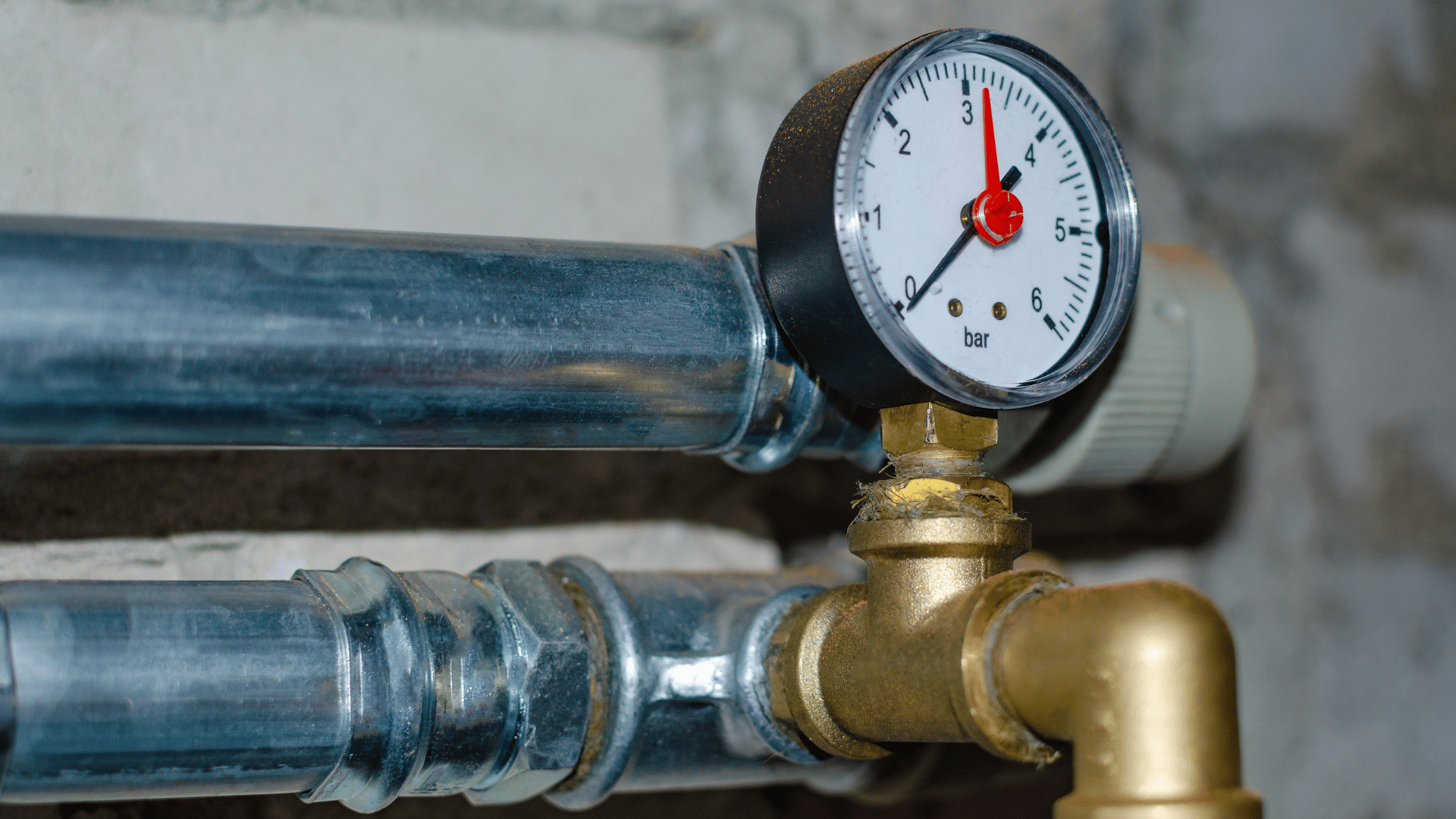
Definition:
-
1 bar = 100,000 pascals (Pa)
-
1 millibar (mbar) = 0.001 bar = 100 Pa
Usage:
-
Widely used in Europe for tire pressure, scuba diving, and hydraulics.
-
Common in meteorology, where millibars or hectopascals (hPa) are used interchangeably.
-
Example: Standard atmospheric pressure = 1,013.25 mbar or 1,013.25 hPa
-
Advantages:
-
Conveniently sized for many practical systems (e.g., 2 bar ≈ 29 psi).
-
Rounded values are easy to read on gauges.
5.2 Atmosphere (atm)
Definition:
-
1 atm = 101,325 Pa = 760 mmHg = 14.7 psi (approx.)
Usage:
-
Common in chemistry and physics, especially in gas law equations (e.g., Ideal Gas Law).
-
Represents standard atmospheric pressure at sea level.
Advantages:
-
Universally understood as a reference for environmental or laboratory pressure conditions.
5.3 Torr and Millimeters of Mercury (mmHg)
Definition:
-
1 Torr = 1/760 atm ≈ 133.322 Pa
-
1 mmHg = ~133.322 Pa (identical to Torr in most contexts)
Usage:
-
Torr: Used in vacuum systems and scientific instruments.
-
mmHg: Used in medicine (e.g., blood pressure = 120/80 mmHg)
Advantages:
-
Provide high precision for low-pressure systems.
-
mmHg is deeply entrenched in medical practices and devices.
5.4 psi (Pounds per Square Inch)
Definition:
-
1 psi = 6,894.76 Pa
Usage:
-
Dominant in the United States and countries using the imperial system.
-
Common in:
-
Automotive industry (tire pressure)
-
Aerospace and HVAC
-
Hydraulics and pneumatics
-
Advantages:
-
Easy to understand and read on U.S.-manufactured equipment.
-
Often appears on consumer products (bike pumps, air compressors, etc.)
5.5 inHg (Inches of Mercury)
Definition:
-
1 inHg = 3,386.39 Pa
Usage:
-
Used in aviation, automotive, and weather instrumentation.
-
Common in engine manifold pressure readings.
5.6 Technical Atmosphere (at)
Definition:
-
1 at = 98,066.5 Pa
Usage:
-
Legacy unit used in Russia and parts of Europe.
-
Sometimes appears in older engineering literature and pressure gauges.
5.7 kgf/cm² (Kilogram-force per Square Centimeter)
Definition:
-
1 kgf/cm² ≈ 98,066.5 Pa (same as 1 at)
Usage:
-
Found in Asian and older European gauges.
-
Still present in industries like hydraulics, pressure vessels, and piping systems.
5.8 Summary Comparison Table
| Unit | Symbol | Pa Equivalent | Common Usage |
|---|---|---|---|
| Bar | bar | 100,000 Pa | Tire pressure, hydraulics, scuba |
| Millibar | mbar | 100 Pa | Weather forecasts |
| Atmosphere | atm | 101,325 Pa | Gas laws, chemistry |
| Torr | Torr | 133.322 Pa | Vacuum systems |
| mmHg | mmHg | 133.322 Pa | Blood pressure, medical devices |
| psi | psi | 6,894.76 Pa | U.S. systems, tires, gas cylinders |
| inHg | inHg | 3,386.39 Pa | Aviation, meteorology |
| kgf/cm² | kg/cm² | 98,066.5 Pa | Hydraulic and mechanical systems |
| Technical atm | at | 98,066.5 Pa | European technical literature (legacy) |
Understanding these non-SI pressure units is vital when working with international equipment, interpreting technical specifications, or calibrating instruments for regional markets. Next, we will focus on how to convert between pressure units accurately and effectively.
6. Conversion Between Pressure Units
Because pressure units vary by region, industry, and application, converting between them is often necessary—especially when dealing with international systems or cross-disciplinary engineering projects. A solid understanding of pressure unit conversions ensures precision in design, safety, and communication.
6.1 Common Conversion Factors
Below is a quick reference table showing how many pascals (Pa) are in each commonly used pressure unit:
| From Unit | To Pascal (Pa) | To psi | To bar | To atm | To Torr |
|---|---|---|---|---|---|
| 1 Pa | 1 | 0.000145038 | 0.00001 | 9.8692e-6 | 0.00750062 |
| 1 psi | 6,894.76 | 1 | 0.0689476 | 0.068046 | 51.7149 |
| 1 bar | 100,000 | 14.5038 | 1 | 0.986923 | 750.062 |
| 1 atm | 101,325 | 14.6959 | 1.01325 | 1 | 760 |
| 1 Torr | 133.322 | 0.0193368 | 0.00133322 | 0.00131579 | 1 |
| 1 mmHg | 133.322 | 0.0193368 | 0.00133322 | 0.00131579 | 1 |
| 1 inHg | 3,386.39 | 0.491154 | 0.0338639 | 0.0334211 | 25.4 |
These conversions are crucial when reading equipment specifications, comparing scientific data, or calibrating sensors.
6.2 How to Convert Pressure Units Step-by-Step
Let’s go through a few examples using common pressure conversions.
Example 1: Convert 2 bar to psi
2 bar×14.5038=29.0076 psi
Example 2: Convert 150 psi to kPa
150 psi×6.89476=1,034.214 kPa
Example 3: Convert 750 mmHg to atm
750 mmHg÷760=0.98684 atm
Example 4: Convert 1013.25 hPa to Pa
1,013.25 hPa×100=101,325 Pa
6.3 Conversion Tips and Best Practices
-
Always use appropriate significant figures, especially in scientific or engineering contexts.
-
Use unit labels clearly to avoid confusion between similar units (e.g., bar vs. mbar).
-
Double-check units on instruments—some gauges show dual units like psi/bar.
-
Use calculators or software tools to reduce manual errors.
-
Watch out for gauge vs. absolute pressure—they can differ significantly:
-
psig = gauge pressure
-
psia = absolute pressure = psig + atmospheric pressure (~14.7 psi)
-
6.4 Online Tools and Apps for Pressure Conversion
Several online converters and mobile apps are available for quick unit conversion:
-
Engineering Toolbox Pressure Converter
-
NIST Unit Converter
-
Pressure Converter App (iOS/Android)
-
Online Unit Conversion Websites (e.g., UnitConverters.net, RapidTables)
These tools are especially helpful when working with uncommon units or when dealing with large datasets.
Mastering pressure unit conversion not only prevents costly engineering errors but also ensures that your calculations align with international standards. In the next section, we’ll explore how pressure is measured and applied in real-world scenarios across different industries.
7. Pressure in Different Applications
Understanding how pressure units apply in real-world scenarios is essential for engineers, technicians, scientists, and even consumers. Different industries rely on pressure measurements using specific units suited to their systems and legacy practices. In this section, we explore how pressure is used and measured in practical applications across various sectors.
7.1 Atmospheric Pressure
Definition and Relevance:
Atmospheric pressure is the pressure exerted by the Earth’s atmosphere at any given point. At sea level, it averages:
-
101,325 Pa
-
1013.25 hPa or mbar
-
1 atm
-
14.7 psi
Applications:
-
Weather forecasting: Low pressure indicates storms; high pressure signals clear skies.
-
Altitude measurement: Aircraft altimeters use pressure to determine height.
-
Engineering design: Equipment operating in open environments must withstand atmospheric pressure.
Common Units Used:
-
hPa, mbar, atm, and inHg (aviation)
7.2 Hydraulic and Pneumatic Systems
Hydraulic and pneumatic systems rely heavily on precise pressure control. These systems convert fluid or air pressure into mechanical force.
Hydraulics:
-
High-pressure liquids (typically oil-based)
-
Common in construction machinery, industrial automation, and aircraft brakes
-
Typical pressures: 1,000 – 5,000 psi, or 6.9 – 34.5 MPa
Pneumatics:
-
Lower pressure compressed air systems
-
Used in robotics, packaging, and factory automation
-
Operating pressures: 80–150 psi, or 0.5–1 MPa
Common Units Used:
-
psi, bar, MPa
7.3 Vacuum Technology
In vacuum systems, pressure is measured below atmospheric pressure. These systems are used in semiconductor manufacturing, space simulation, and laboratory research.
Vacuum Ranges:
-
Low vacuum: 1,000 to 1 mbar
-
Medium vacuum: 1 to 10⁻³ mbar
-
High vacuum: 10⁻³ to 10⁻⁹ mbar (or Torr)
-
Ultra-high vacuum: <10⁻⁹ mbar
Common Units Used:
-
Torr, mTorr, Pa, micron, mmHg
7.4 Medical Applications
In medicine, pressure plays a vital role in diagnostics and patient care.
Examples:
-
Blood pressure: Measured in mmHg
-
Normal range: 120/80 mmHg
-
-
Respiratory therapy: Positive Airway Pressure (PAP) devices
-
Intracranial pressure: Monitored in critical care units
Common Units Used:
-
mmHg, occasionally converted to cmH₂O or kPa
7.5 Industrial Gas and Fluid Storage
Compressed gas cylinders and fluid containers must be accurately rated and monitored for pressure.
Examples:
-
Oxygen tanks, propane cylinders, nitrogen bottles
-
Operating pressure: up to 3,000 psi or more
-
Pressure relief valves prevent overpressurization
Common Units Used:
-
psi, bar, MPa
7.6 Automotive and Aerospace Systems
Automotive:
-
Tire pressure: Commonly measured in psi or bar
-
Fuel system pressure, oil pressure, and boost pressure in turbocharged engines
Aerospace:
-
Aircraft cabin pressurization systems
-
Altitude determined by pressure differential (using inHg)
-
Hydraulic landing gear and brake systems operating in psi
7.7 HVAC and Building Systems
In heating, ventilation, and air conditioning systems, pressure governs refrigerant flow and airflow regulation.
Examples:
-
Refrigerant circuit pressures: high side (200–300 psi), low side (30–60 psi)
-
Duct static pressure: measured in inH₂O or Pa
7.8 Scientific Research and Laboratories
-
Chemistry: Gas laws use atm, Pa, or Torr
-
Physics: Surface tension and stress measured in Pa, N/m²
-
Material science: Testing material strength in MPa or GPa
Summary Table by Industry
| Industry | Common Units | Typical Pressure Ranges |
|---|---|---|
| Meteorology | hPa, mbar, inHg | 950–1050 hPa |
| Hydraulics | psi, bar, MPa | 1,000–5,000 psi |
| Vacuum Systems | Torr, mTorr, Pa | 10⁻¹ to 10⁻⁹ mbar |
| Medical | mmHg, cmH₂O | 80–180 mmHg (BP), 5–20 cmH₂O |
| Automotive | psi, bar | 30–35 psi (tires), 10–100 psi (engine) |
| Aerospace | psi, inHg, Pa | 3,000 psi (hydraulics), 29.92 inHg |
| Industrial Gas | psi, MPa, bar | Up to 3,000 psi or more |
8. Instrumentation for Measuring Pressure
To effectively monitor and control systems involving fluids or gases, specialized instruments are used to measure pressure. These instruments vary in design and accuracy, but all display results in specific pressure units—making it vital for operators and engineers to understand both the measurement tools and their units.
8.1 Pressure Gauges
Overview:
Pressure gauges are the most common tools used to measure pressure in industrial, automotive, and HVAC systems. They can be analog or digital.
Types of Pressure Gauges:
-
Bourdon Tube Gauges:
-
Most widely used analog pressure gauge.
-
Measures pressure through the deformation of a curved tube.
-
Often displays readings in psi, bar, or dual-scale (e.g., psi/bar).
-
-
Digital Pressure Gauges:
-
Electronic sensors measure pressure and display digital values.
-
Support multiple units: Pa, kPa, psi, bar, etc.
-
Can interface with data logging systems or SCADA.
-
-
Differential Pressure Gauges:
-
Measure the difference between two pressure points.
-
Common in filters, pumps, and flow measurement.
-
Key Features:
-
Scale calibration (e.g., 0–100 psi, 0–10 bar)
-
Overpressure protection
-
Accuracy classification
8.2 Barometers
Barometers are used specifically to measure atmospheric pressure, especially in meteorology and aviation.
Types:
-
Mercury Barometer:
-
Uses a column of mercury in a glass tube.
-
Pressure is read in mmHg or inHg.
-
Highly accurate but less common today due to mercury toxicity.
-
-
Aneroid Barometer:
-
Contains a sealed, flexible metal chamber.
-
More compact and widely used in portable devices.
-
Calibrated in hPa, mbar, or inHg.
-
Applications:
-
Weather prediction
-
Altitude measurement
-
Aircraft instrumentation (altimeters)
8.3 Manometers
Manometers are devices that measure pressure by balancing a fluid column between two points.
Types:
-
U-Tube Manometer:
-
A U-shaped tube filled with water or mercury.
-
Pressure is read as the height difference of the liquid column.
-
Measured in cmH₂O, mmHg, or inH₂O.
-
-
Inclined Manometer:
-
More sensitive than the U-tube type.
-
Used for low-pressure differential measurements, such as airflow in ducts.
-
Use Cases:
-
Lab calibration
-
Clean room monitoring
-
HVAC ductwork testing
8.4 Pressure Transducers and Sensors
These are electronic devices that convert pressure into an electrical signal.
Features:
-
High accuracy and sensitivity
-
Used in automation and digital control systems
-
Output can be analog (voltage or current) or digital (modbus, I2C)
Common Applications:
-
Industrial process monitoring
-
Medical devices (e.g., ventilators)
-
Aerospace systems
Units Displayed:
Most pressure sensors allow configuration for units such as:
-
Pa, kPa, MPa
-
psi, bar
-
mmHg, Torr
8.5 Calibration and Standards
Pressure measurement instruments must be calibrated against traceable standards to ensure accuracy.
Standards Organizations:
-
NIST (National Institute of Standards and Technology)
-
ISO/IEC 17025 for testing/calibration labs
-
ASME, DIN, and ANSI for instrument accuracy and build specs
Calibration Units:
Most calibration certificates list measurements in Pa, psi, or bar, and often show deviations from reference values.
8.6 Dual-Unit Displays and Multi-Scale Gauges
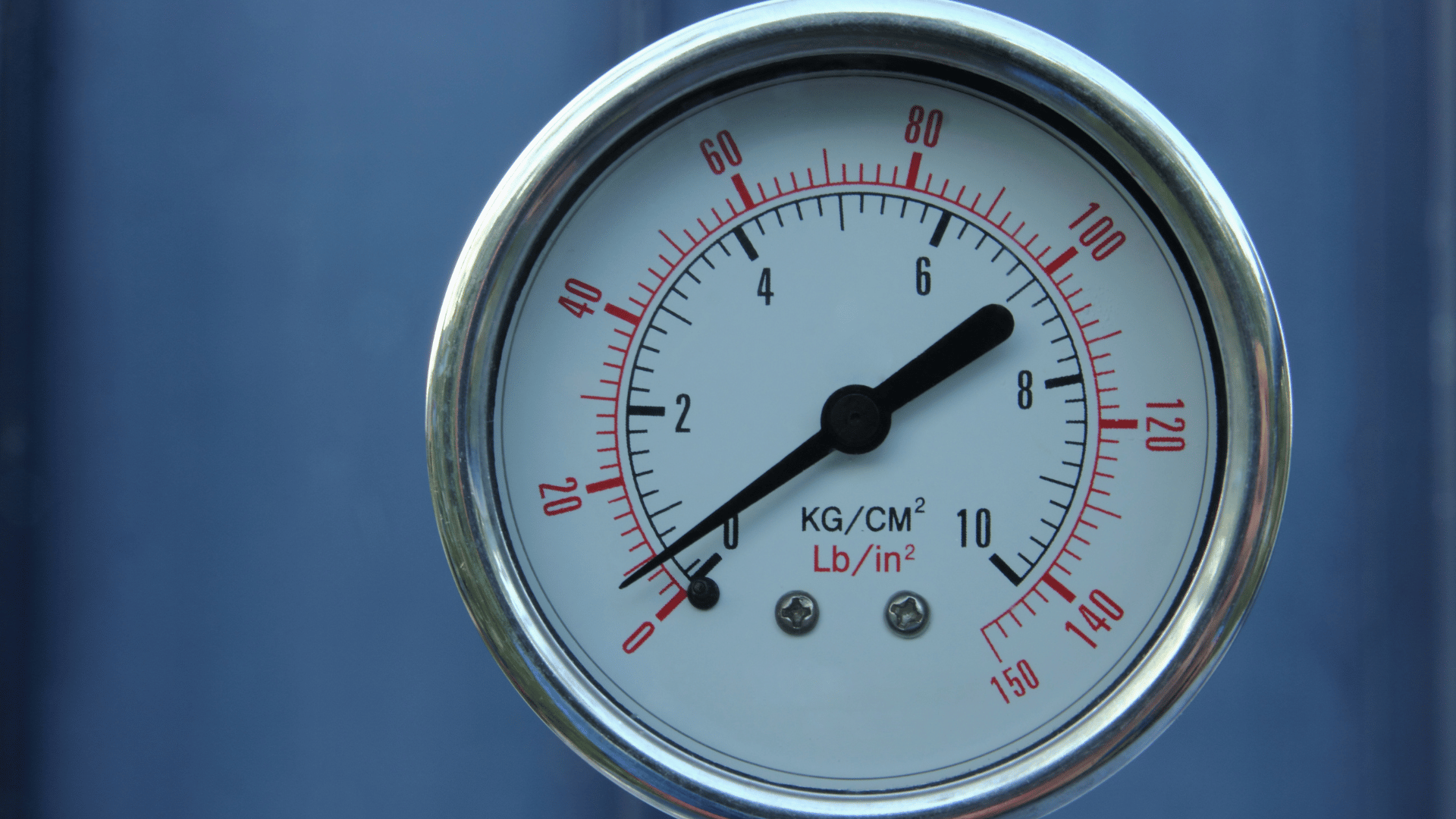
Many gauges and instruments are marked with dual scales, especially those used internationally.
Examples:
-
psi / bar combinations on compressor gauges
-
mmHg / kPa on blood pressure monitors
-
inHg / hPa on aviation altimeters
Benefits:
-
Supports international operations
-
Simplifies comparison and conversion
-
Reduces operator error
Having the right instrument and choosing the correct pressure unit is essential for accurate, safe, and efficient system operation. Next, we’ll discuss how pressure standards are enforced and how calibration ensures global consistency.
9. Pressure Standards and Calibration
To ensure accuracy, consistency, and safety across industries, pressure measurement devices must conform to recognized standards and undergo regular calibration. This section explores how pressure units are standardized globally and how calibration guarantees that instruments deliver reliable and traceable readings.
9.1 Why Pressure Standards Matter
In engineering, healthcare, manufacturing, and science, even minor deviations in pressure readings can lead to:
-
System inefficiency or failure
-
Safety risks (e.g., overpressurized vessels)
-
Invalid test results
-
Legal compliance issues
Standardized pressure units and calibration procedures allow users to trust the readings from their instruments, regardless of location or device brand.
9.2 Key International Standards Organizations
Several global and national bodies develop and maintain standards related to pressure measurement:
| Organization | Full Name | Focus |
|---|---|---|
| ISO | International Organization for Standardization | Global measurement and device standards |
| IEC | International Electrotechnical Commission | Standards for electrical/electronic systems |
| ASME | American Society of Mechanical Engineers | Pressure vessels, piping, and industrial systems |
| ANSI | American National Standards Institute | U.S. national standardization, works with ISO/ASME |
| NIST | National Institute of Standards and Technology (U.S.) | Reference standards and calibration traceability |
9.3 Common Pressure Measurement Standards
Some of the most recognized pressure-related standards include:
-
ISO 17025: General requirements for the competence of testing and calibration laboratories
-
ASME B40.100: Guidelines for pressure gauge design and performance
-
DIN 16001–16005: German standards for pressure measurement instruments
-
IEC 61298: Testing and performance evaluation of process instrumentation
These documents define units, accuracy tolerances, construction methods, and calibration procedures.
9.4 Calibration of Pressure Instruments
Calibration is the process of comparing an instrument’s readings to a known reference (standard) and adjusting it if necessary.
Calibration Process Overview:
-
Setup: Connect the test gauge to a high-accuracy reference standard (e.g., deadweight tester or digital calibrator).
-
Apply pressure: Incrementally apply known pressures.
-
Record values: Compare instrument readings with reference values.
-
Adjust if necessary: Some instruments allow recalibration or zeroing.
-
Document results: A calibration certificate is issued, often listing:
-
Instrument info
-
Date and technician name
-
Reference standard used
-
Readings vs. reference
-
Uncertainty of measurement
-
Calibration traceability (usually in Pa, psi, or bar)
-
9.5 Calibration Frequency and Best Practices
How Often Should You Calibrate?
-
Annually (most common for general-use instruments)
-
More frequently for critical applications (e.g., medical or aerospace)
-
After mechanical shock, overpressure, or exposure to harsh environments
Best Practices:
-
Always calibrate using traceable standards
-
Use a certified calibration lab (ISO 17025 accredited)
-
Keep records for audits and maintenance logs
-
Use the same units as operational environment to avoid conversion error
9.6 Role of Pressure Units in Calibration
-
Calibration reports always specify units of measurement.
-
Switching between units (e.g., from psi to kPa) during calibration must be carefully documented.
-
Some instruments allow unit selection via digital interface, but the default calibration unit must match the application standard.
Accurate, consistent, and standardized pressure unit calibration is the backbone of reliable measurements across all industries. In the next section, we’ll examine potential errors and challenges that can occur when using or converting pressure units—and how to avoid them.
10. Challenges and Errors in Using Pressure Units
Despite advancements in instrumentation and digital tools, pressure unit errors are still a common cause of miscommunication, equipment failure, and safety incidents. Understanding the most frequent challenges associated with pressure units can help engineers, technicians, and operators avoid costly mistakes.
10.1 Mixing Absolute and Gauge Pressure
One of the most critical and frequent errors is the confusion between:
-
Gauge Pressure (psig, barg): Measured relative to atmospheric pressure
-
Absolute Pressure (psia, bara): Measured relative to a vacuum
Example Mistake:
Designing a vacuum system that operates at 15 psig, thinking it’s near a vacuum — when in reality, 15 psig = ~30 psia (well above atmospheric pressure).
Prevention Tips:
-
Always check if the reading is gauge or absolute
-
Use consistent labeling on equipment and drawings (e.g., psia vs psig)
-
When in doubt, add atmospheric pressure (~14.7 psi) to gauge pressure for absolute
10.2 Incorrect Unit Conversion
Unit conversion errors often result from:
-
Using outdated or incorrect conversion factors
-
Mislabeling values (e.g., assuming bar is equal to atm)
-
Manual calculation mistakes
Example:
Assuming 1 atm = 100,000 Pa instead of 101,325 Pa — a 1.3% error, which may seem small but can lead to noncompliance or tolerance violations in precision systems.
Prevention Tips:
-
Use verified tools or software for conversions
-
Avoid mixing imperial and metric units without clear documentation
-
Always label units explicitly on instruments, spreadsheets, and reports
10.3 Regional and Industry-Specific Preferences
Different industries and countries use different default pressure units, which can cause confusion in international projects.
Examples:
-
U.S. engineers use psi, while European teams prefer bar
-
Medical professionals use mmHg, but scientific teams use Pa
-
Semiconductor fabs use Torr, while HVAC uses inH₂O
Solution:
-
Set clear unit conventions in project documentation
-
Include unit conversion reference tables in reports
-
Train teams to recognize and convert between common units
10.4 Multi-Scale Instruments Misreading
Some gauges display multiple pressure units on a single dial, which can lead to misreading if:
-
The operator reads the wrong scale
-
The pointer sits between units
-
Poor lighting or dirt obscures labels
Solution:
-
Prefer digital displays with configurable unit readouts
-
Train staff to double-check selected scale
-
Use color-coded dials or labels to distinguish units clearly
10.5 Calibration Inconsistencies
If pressure gauges or sensors are calibrated in one unit and used in another without proper conversion, errors can accumulate.
Examples:
-
Calibrating a sensor in kPa but displaying results in psi
-
Forgetting to switch units on digital sensors after recalibration
Best Practice:
-
Always calibrate and operate in the same unit system
-
Document any unit changes explicitly in calibration records
10.6 Software or Spreadsheet Errors
Engineering calculations involving pressure often rely on spreadsheets. But:
-
Copy-pasting values between different units without conversion
-
Forgetting unit labels
-
Overriding formulas manually
… can introduce hidden errors.
Mitigation:
-
Lock formula cells and use unit tags
-
Implement automated unit conversion functions
-
Use professional simulation software where possible
10.7 Legal and Compliance Risks
Incorrect pressure unit use can cause noncompliance with:
-
Regulatory codes (e.g., ASME, ISO)
-
Safety standards for pressure vessels
-
Pharmaceutical and medical device regulations
These errors can result in legal penalties or failed audits.
11. Tips for Choosing the Right Pressure Unit
Selecting the correct pressure unit is not just about accuracy—it’s also about safety, clarity, compliance, and ease of communication. Depending on your industry, location, or equipment, some pressure units are more appropriate than others.
11.1 Consider Industry Norms
Each industry has well-established conventions for pressure measurement units:
| Industry | Common Pressure Units |
|---|---|
| Automotive | psi, bar |
| HVAC and Refrigeration | psi, inHg, inH₂O |
| Medical | mmHg, cmH₂O |
| Aerospace | psi, inHg |
| Scientific Research | Pa, atm, Torr |
| Oil & Gas | psi, MPa |
| Hydraulics | psi, bar, MPa |
| Meteorology | hPa, mbar, inHg |
| Semiconductor | Torr, mTorr, Pa |
🛠 Tip: Match the pressure unit to what your colleagues, clients, or industry standards expect to avoid confusion.
11.2 Match Your Equipment and Tools
Use the unit that:
-
Matches the readout on your gauges and sensors
-
Aligns with your calibration documentation
-
Is compatible with your data acquisition systems
🛠 Tip: If your pressure gauge is marked in bar, don’t convert and work in psi unless necessary—you increase the chance of conversion error.
11.3 Use SI Units in Engineering and Science
When in doubt, default to SI units—especially for:
-
Engineering calculations
-
Scientific documentation
-
International collaboration
Most scientific disciplines use pascals (Pa) and megapascals (MPa) for consistency and compatibility with other SI units.
11.4 Consider Readability and Practical Range
Choose a unit that provides readable numbers in the pressure range you’re working in.
Examples:
-
Atmospheric pressure = 101,325 Pa → better expressed as 101.3 kPa or 1 atm
-
Hydraulic systems = 3000 psi → better than 20.7 MPa if you’re in North America
-
Blood pressure = 120 mmHg, not 15,998 Pa
🛠 Tip: Avoid using units that result in awkward or confusing values (e.g., 0.000987 MPa for tire pressure).
11.5 Prioritize Consistency Within Projects
Use one unit system throughout your project unless absolutely necessary.
Inconsistent units can cause:
-
Costly design or manufacturing errors
-
Misinterpretation of data
-
Difficulties during commissioning or calibration
🛠 Tip: Include a unit declaration in every design, calculation, or report. For example:
“All pressures are in MPa unless otherwise stated.”
11.6 Legal and Regulatory Requirements
Some applications must use specific units due to legal codes or safety standards.
Examples:
-
ASME Boiler and Pressure Vessel Code (BPVC) often uses psi
-
ISO-based engineering drawings require SI units (Pa, MPa)
-
U.S. medical devices typically use mmHg
🛠 Tip: Always check regulatory documents and customer specifications before selecting units.
11.7 Dual-Label When Needed
For international projects or documentation used across teams:
-
Provide values in both local and standard units.
-
Use parentheses:
E.g., “Operating pressure: 2500 psi (17.2 MPa)”
🛠 Tip: Use dual-labeling in manuals, equipment tags, and control panel displays to enhance clarity.
11.8 Unit Conversion Best Practices
-
Use trusted tools, not mental math
-
Maintain unit precision (don’t round too early)
-
Always label units in spreadsheets and drawings
-
Train your team on unit awareness
By selecting the correct pressure unit and using it consistently, you improve safety, simplify calculations, and reduce the risk of errors. In the next section, we’ll highlight some helpful tools, charts, and resources for mastering pressure units and conversions.
12. Educational Tools and Resources
Understanding and converting pressure units becomes significantly easier when you have access to the right tools and resources. Whether you’re a student, technician, engineer, or scientist, these aids can streamline calculations, improve accuracy, and reinforce learning.
12.1 Printable Conversion Charts
Pressure unit conversion tables are one of the most basic yet powerful tools.
What they include:
-
Quick lookup for psi ↔ Pa, bar ↔ atm, etc.
-
Side-by-side comparison tables
-
Visual guides with needle gauges or dials
Where to use:
-
Workshops
-
Labs and calibration rooms
-
Engineering notebooks
🛠 Tip: Laminate these charts and keep them near workstations for fast access.
12.2 Online Pressure Conversion Calculators
Web-based tools allow users to input values and instantly convert between units.
Trusted examples:
-
EngineeringToolbox.com
-
UnitConverters.net
-
RapidTables.com
-
CalculatorSoup.com
These tools typically support:
-
Multiple units (psi, bar, Pa, atm, Torr, mmHg, etc.)
-
Batch conversions
-
Decimal precision control
🛠 Tip: Bookmark your favorite converters for daily use.
12.3 Mobile Apps for Pressure Conversion
There are many unit converter apps available for Android and iOS devices.
Popular apps:
-
Units Plus Converter
-
ConvertPad
-
Pressure Converter by Intemodino
-
Engineering Unit Converter (by Smart Tools)
Features:
-
Offline functionality
-
Custom unit settings
-
Multiple language support
🛠 Tip: Choose an app that lets you select frequently used pressure units as favorites.
12.4 Excel-Based Pressure Conversion Tools
For engineers and technical professionals, custom spreadsheet tools can simplify unit conversion during design or analysis.
Features include:
-
Auto-conversion formulas
-
Dropdowns for unit selection
-
Integration into larger engineering models
🛠 Tip: Protect formula cells to avoid accidental overwrites, and label all unit columns clearly.
12.5 E-Learning Platforms and Videos
If you’re looking to deepen your understanding of pressure units and their applications, explore:
-
Khan Academy (physics and fluid dynamics)
-
Coursera / edX (engineering basics)
-
YouTube channels like LearnEngineering and Real Engineering
🛠 Tip: Look for videos that include visual demonstrations of pressure concepts with real instruments.
12.6 Manufacturer and Industry Resources
Many manufacturers provide detailed guides and datasheets that include unit conversion help, especially in:
-
Hydraulics (e.g., Parker, Swagelok)
-
HVAC (e.g., Danfoss, Honeywell)
-
Instrumentation (e.g., WIKA, Ashcroft)
🛠 Tip: Download free product catalogs—they often contain handy engineering reference charts.
12.7 Simulation and Modeling Software
For more advanced engineering work:
-
MATLAB and Simulink (modeling pressure systems with unit consistency)
-
ANSYS, COMSOL, and SolidWorks Simulation (stress analysis in MPa)
-
FluidSIM or Automation Studio (pneumatic/hydraulic simulation)
These tools support pressure units internally and help visualize system behavior under pressure.
12.8 Physical Demonstration Kits
For classrooms or training environments:
-
Pressure demonstration kits with U-tube manometers, syringes, and fluid tanks
-
Hands-on experiments help explain pressure, flow, and unit measurement
🛠 Tip: Use clear tubes and colored water for more visible demonstrations.
13. Future of Pressure Measurement and Units
As technology continues to evolve, so too does the way we measure, report, and interpret pressure units. From smart sensors to standardized digital systems, the future of pressure measurement lies in automation, integration, and global consistency.
13.1 Rise of Smart Pressure Sensors
Modern industries are increasingly adopting intelligent pressure sensors that not only measure pressure but also:
-
Convert units automatically (e.g., Pa ↔ psi ↔ bar)
-
Send data wirelessly to cloud platforms
-
Monitor conditions continuously in real time
Benefits:
-
Eliminates manual unit conversions
-
Reduces human error
-
Enables predictive maintenance and automation
🛠 Example: In a smart factory, a wireless sensor might log data in kPa, but the operator dashboard displays it in psi, depending on user preference.
13.2 Integration with IoT and Industry 4.0
The Internet of Things (IoT) is changing how pressure units are used:
-
Data from sensors is transmitted via Ethernet or wireless protocols
-
Units are standardized across platforms using metadata tags (e.g., IEEE 1451 or OPC UA)
-
Multinational factories can view pressure data in multiple units based on operator settings
Use Case:
A gas pipeline sensor in Germany reports in bar, while a control room in the U.S. sees it in psi, both using the same data stream.
13.3 Global Standardization Initiatives
Organizations such as ISO and NIST continue to push for uniform pressure unit usage across industries to eliminate confusion.
Trends:
-
Phasing out legacy units like kgf/cm² and technical atmosphere (at)
-
Promoting the universal use of pascals (Pa) in scientific and industrial applications
-
Encouraging global compliance with SI units to improve interoperability
13.4 Digital Twin Technology
With the rise of digital twins—virtual replicas of physical systems—pressure data is now:
-
Simulated in software (e.g., in MPa)
-
Synced with live sensor data
-
Scaled across different unit systems automatically for global users
🛠 Example: Engineers in Japan and Brazil collaborate on a hydraulic model, with each using their native pressure unit preferences while working on the same real-time system.
13.5 Augmented and Mixed Reality Interfaces
New interfaces are emerging for technicians and engineers using AR/VR headsets, which display:
-
Live pressure values
-
Unit options based on user role or region
-
Real-time overlays with unit conversion built-in
This helps operators visualize whether readings are safe or critical—regardless of which unit system they’re trained in.
13.6 Environmental and Regulatory Impact
Pressure unit standardization also affects:
-
Environmental regulations: Emissions and containment systems depend on pressure thresholds.
-
Safety codes: Emergency venting systems must use clearly defined pressure ratings in correct units.
-
Medical device regulation: International harmonization (e.g., FDA, CE) now pushes for SI-based readings.
13.7 Educational Trends and Digital Learning
With the rise of digital learning, training platforms now embed:
-
Interactive simulations with real-time unit selection
-
Dynamic quizzes with pressure conversion tasks
-
Certification tracks in instrumentation and metrology
🛠 Tip: Platforms like LinkedIn Learning and Coursera are including pressure unit fundamentals in courses on engineering fundamentals and Industry 4.0 readiness.
14. Summary and Key Takeaways
Pressure is a universal force in physics, engineering, medicine, and the environment. Whether you’re inflating a tire, designing a spacecraft, monitoring blood pressure, or managing a refinery, a solid understanding of pressure units is essential for accurate measurement, safe operation, and effective communication.
14.1 What You’ve Learned
✅ What pressure is: Force per unit area (P = F/A), and why it matters in every aspect of applied science and engineering.
✅ Types of pressure:
-
Gauge: Relative to atmospheric pressure
-
Absolute: Relative to a perfect vacuum
-
Differential: Difference between two points
✅ SI unit of pressure:
-
The pascal (Pa) = 1 N/m²
-
Often used in multiples like kPa, MPa, and GPa
✅ Common non-SI units:
-
psi (U.S. industries)
-
bar (Europe, scuba, hydraulics)
-
atm (scientific reference)
-
Torr, mmHg (vacuum, medical)
-
inHg, inH₂O (aviation, HVAC)
✅ Conversion best practices:
-
Use accurate, trusted conversion factors
-
Avoid mixing units carelessly
-
Prefer tools or software to eliminate manual errors
✅ Application insights:
-
Different units dominate different fields
-
Always match your units to your tools, team, and industry standards
✅ Instrumentation and calibration:
-
Instruments must match the unit of measurement
-
Calibrate regularly, document clearly
-
Comply with standards like ISO 17025, ASME, and NIST traceability
✅ Common pitfalls:
-
Confusing gauge with absolute pressure
-
Misreading multi-scale instruments
-
Forgetting to convert or label units in calculations and reports
✅ Future trends:
-
Smart pressure sensors and IoT integration
-
Global push toward SI unit standardization
-
AR/VR and digital twins changing how pressure data is visualized
14.2 Final Thoughts
The variety of pressure units in use today is both a reflection of technological history and a challenge of modern standardization. With the right tools, awareness, and discipline, you can confidently navigate these units in any setting—from the lab to the field.
Whether you’re a student learning the basics, a technician interpreting gauge readouts, or an engineer designing complex systems, mastering pressure units empowers you to work smarter, safer, and more globally connected.
15. FAQs About Pressure Units
To wrap up, here are answers to some of the most frequently asked questions about pressure units, providing quick clarification on common points of confusion.
Q1: What is the difference between absolute pressure and gauge pressure?
-
Gauge Pressure (psig, barg) is measured relative to atmospheric pressure (0 = atmospheric pressure).
-
Absolute Pressure (psia, bara) is measured relative to a perfect vacuum.
🛠 Formula:
Absolute Pressure=Gauge Pressure+Atmospheric Pressure
Q2: Why are mmHg and Torr used interchangeably?
Both represent the same thing: the pressure exerted by a millimeter column of mercury. In practice:
-
1 mmHg = 133.322 Pa
-
1 Torr = 1/760 atm = ~133.322 Pa
They are numerically equal, but Torr is more common in scientific/vacuum applications, while mmHg is used in medicine.
Q3: How many psi are in a bar?
-
1 bar = 14.5038 psi
-
1 psi = 0.0689476 bar
Use these values for quick conversions in automotive, scuba, or hydraulic systems.
Q4: Is bar the same as atmospheric pressure?
Not quite.
-
1 bar = 100,000 Pa
-
1 atm = 101,325 Pa
So, 1 bar is slightly less than 1 atmosphere. This difference can be important in high-precision applications.
Q5: Why do engineers prefer kPa or MPa over Pa?
Because:
-
Pa is a small unit. For example, atmospheric pressure is 101,325 Pa.
-
kPa and MPa give more readable values:
-
101.3 kPa (atmospheric pressure)
-
25 MPa (typical hydraulic system)
-
Q6: What unit should I use for tire pressure?
That depends on your region:
-
psi is standard in the U.S.
-
bar is more common in Europe.
-
Some digital devices show both.
Q7: Can I use pressure units interchangeably?
No. Always convert accurately between units using trusted formulas or tools. Pressure unit confusion can lead to serious engineering or safety problems.
Q8: How is pressure measured in vacuum systems?
-
Torr, mTorr, or micron for high/ultra-high vacuum
-
Pa or mbar in scientific setups
-
Instruments: vacuum gauges, ionization gauges, capacitance manometers
Q9: How often should I calibrate a pressure gauge?
-
Annually, at a minimum
-
More often if the gauge is used frequently, exposed to vibration, or critical to safety
-
Always use traceable standards (e.g., NIST or ISO 17025 accredited labs)
Q10: What happens if I use the wrong pressure unit in my design?
Consequences can include:
-
Component failure (e.g., burst hoses)
-
Poor system performance
-
Failed safety inspections
-
Legal liability in regulated industries
By keeping these FAQs in mind, you’ll avoid common mistakes and deepen your understanding of pressure units and their real-world implications.
Convert Hectares to Acres for Land Measurement
Kilometer to Yard Conversion : How Many Yards in a Kilometer