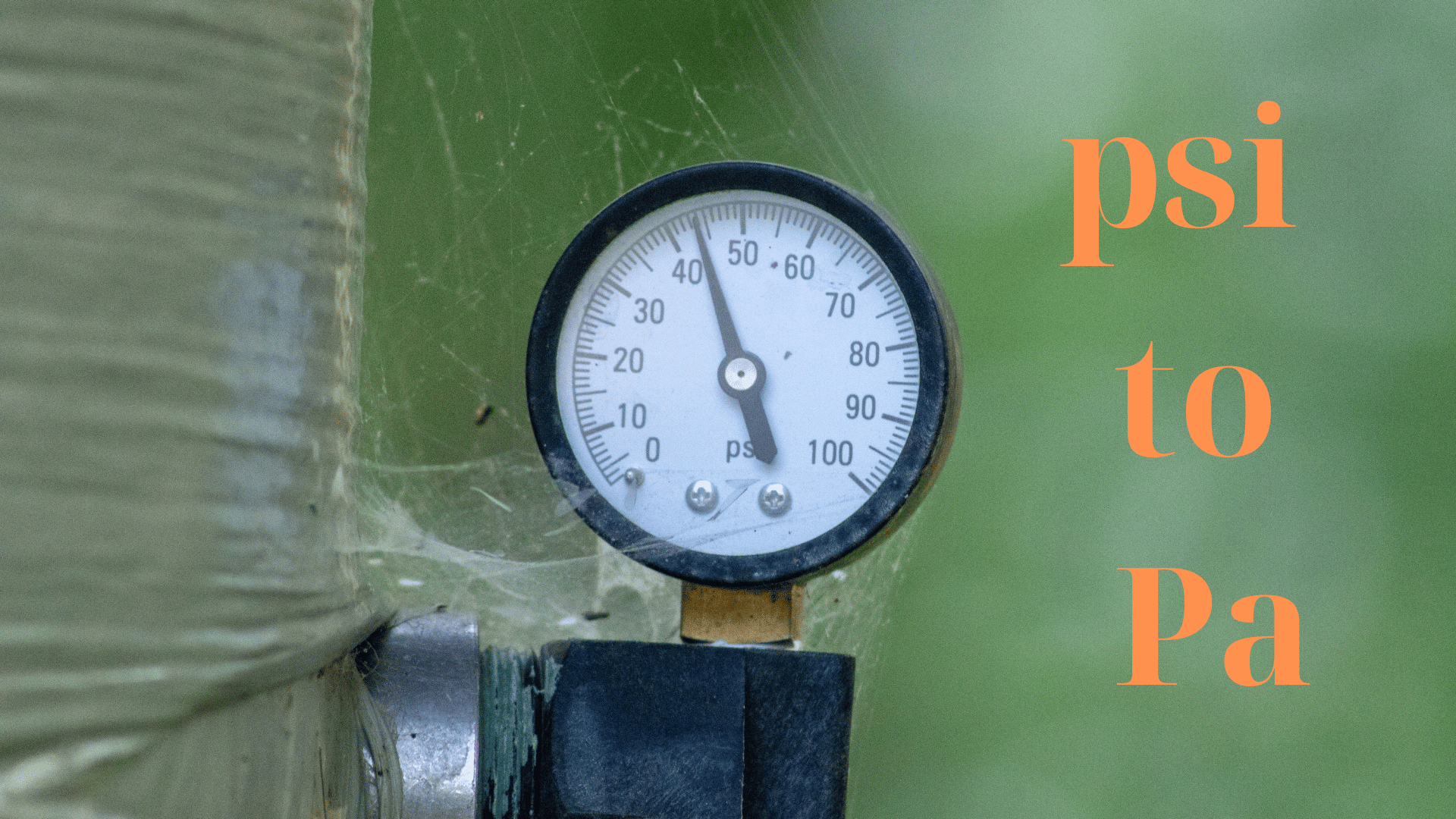
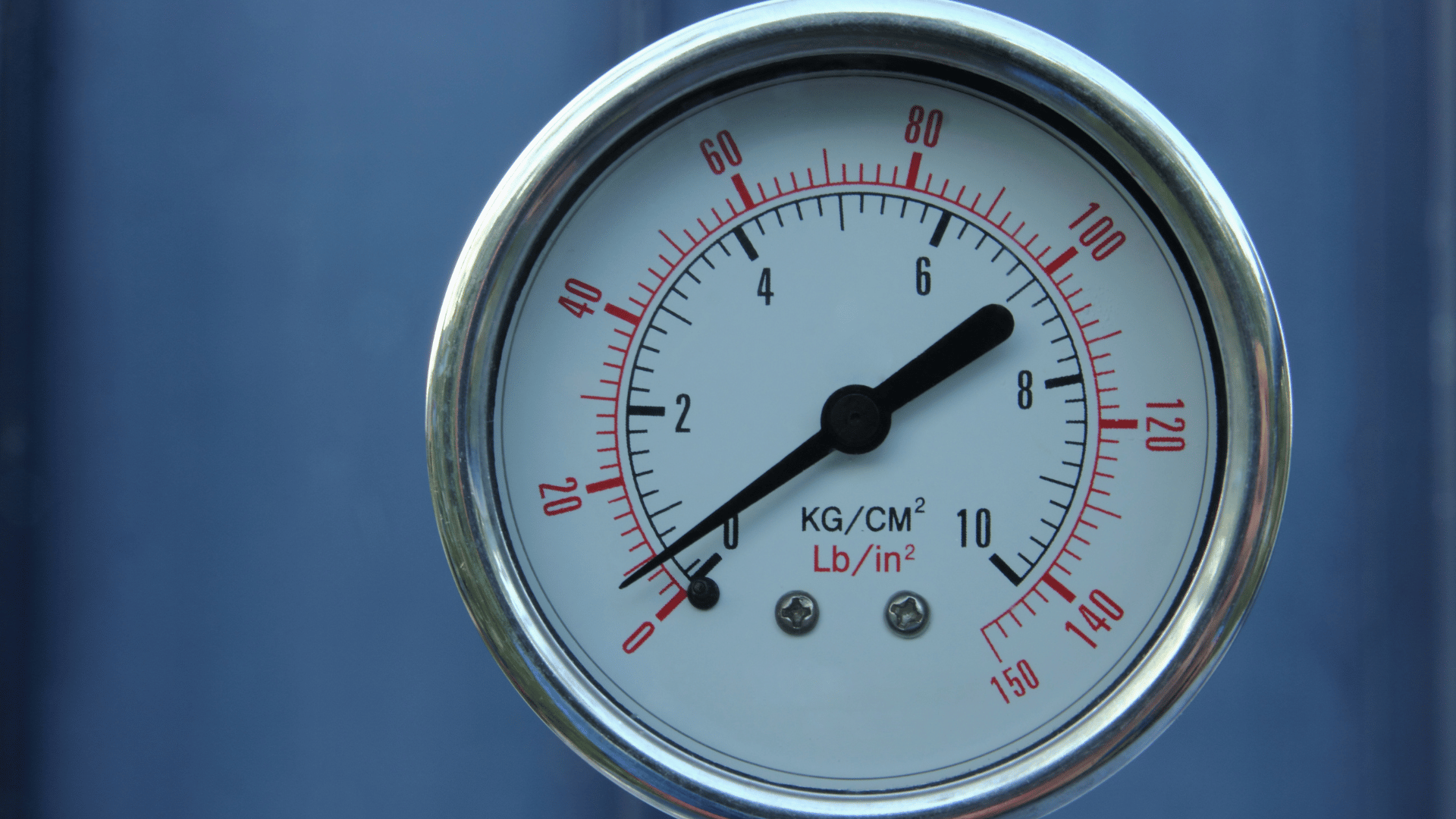
In the world of engineering, construction, manufacturing, and fluid dynamics, understanding pressure units is crucial for accurate measurement and system integrity. Among the many pressure units used globally, MPa (megapascal) and PSI (pounds per square inch) are two of the most common, yet they originate from different measurement systems—metric and imperial, respectively. As industries grow increasingly globalized, professionals and technicians often find themselves needing to convert MPa to PSI and vice versa to ensure compatibility, safety, and performance in their equipment and designs.
Whether you’re reading a datasheet for a hydraulic pump, evaluating the pressure strength of materials, or adjusting the settings of an industrial gas regulator, you’re likely to encounter the need to convert MPa to PSI. The importance of mastering this conversion lies not only in accurate calculations but also in meeting international standards and avoiding critical errors.
This comprehensive article will guide you through everything you need to know about converting MPa to PSI, including what these units represent, why the conversion is important, how to calculate it manually or digitally, and where these conversions are used in real-world applications. By the end, you’ll have a solid grasp of both units and the confidence to switch between them in any technical context.
What Is MPa?
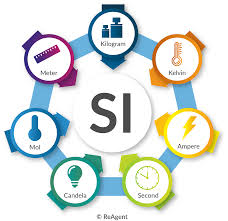
MPa, or megapascal, is a unit of pressure commonly used in engineering and scientific applications, particularly within countries that follow the International System of Units (SI). One megapascal is equal to 1 million pascals (Pa), and it is often used to express high-pressure values such as those found in hydraulic systems, structural analysis, and material testing.
To better understand MPa, it helps to start with the pascal (Pa), which is the SI-derived unit of pressure defined as one newton per square meter (N/m²). While the pascal is useful in theory, it is often too small for practical use in engineering. As a result, the megapascal—a multiple of the pascal—became the preferred unit in many technical fields. Specifically:
-
1 MPa = 1,000,000 Pa
-
1 MPa = 1 N/mm²
The MPa to PSI conversion becomes essential because MPa is widely adopted in countries that use the metric system, while PSI is still the norm in the United States and other nations using the imperial system. For instance, a hydraulic system rated at 25 MPa in Europe might need to be interpreted in PSI when reviewed by a U.S.-based engineer. In such a case, converting MPa to PSI accurately ensures the equipment operates safely under the right pressure conditions.
Where Is MPa Commonly Used?
-
Hydraulics and Pneumatics: To rate the pressure capacity of systems and components.
-
Structural Engineering: To measure stress, such as the compressive strength of concrete (e.g., 40 MPa).
-
Material Testing: Tensile strength of metals and polymers is often measured in MPa.
-
Automotive and Aerospace Engineering: Where precise pressure standards are crucial to safety and performance.
Understanding the MPa to PSI relationship is crucial when working across different engineering cultures and standards. Whether you’re assessing material limits or evaluating the performance of pressure-sensitive systems, MPa serves as a foundational metric that can’t be ignored.
What Is PSI?
PSI, or pounds per square inch, is a unit of pressure commonly used in the imperial system. It measures the amount of force (in pounds) applied over an area of one square inch. This unit is widely used in the United States, as well as in some other countries and sectors that continue to rely on imperial measurements.
Mathematically, 1 PSI = 1 pound-force / square inch. It’s a unit that makes intuitive sense in mechanical and industrial contexts where pressure is experienced as a force over a defined area. The MPa to PSI conversion is critical in such industries because many technical specifications, especially those involving pressure ratings, are often provided in one system but need to be interpreted in another.
Key Applications of PSI
-
Tire Pressure: Vehicle tire inflation levels are typically measured in PSI. For example, most car tires are inflated to about 30–35 PSI.
-
Pneumatics: Air compressors, valves, and hoses in pneumatic systems are often rated using PSI.
-
HVAC Systems: PSI is used to monitor refrigerant pressure and air handling performance.
-
Oil & Gas Industry: Many pressure gauges in the U.S. oil field environment read in PSI.
-
Water Systems and Firefighting Equipment: PSI is a standard unit to describe water pressure in hoses and plumbing lines.
The prevalence of PSI in certain regions and industries makes it a necessary counterpart to MPa. Therefore, engineers and technicians frequently need to perform MPa to PSI conversions to align data with system requirements or local standards.
For example, if a pipe is rated at 20 MPa, converting that to PSI helps a U.S.-based operator understand that the system is designed to handle approximately 2,900 PSI. Such conversions help ensure that all professionals, regardless of their system of measurement, are working with the same pressure expectations.
Why Convert MPa to PSI?
Converting MPa to PSI is essential in today’s globalized engineering, construction, and manufacturing environments. While many countries adopt the metric system (and thus use MPa for pressure), others—like the United States—primarily use the imperial system, with PSI being the standard unit for pressure. This discrepancy in measurement systems means professionals often need to convert values between MPa and PSI to ensure consistency, safety, and compliance in technical work.
Here are several reasons why converting MPa to PSI is crucial:
1. International Collaboration
Global engineering projects often involve cross-border teams. A hydraulic pump rated at 30 MPa in Germany may be reviewed or installed by a U.S.-based technician who interprets the pressure in PSI. Without accurate MPa to PSI conversion, miscommunication or improper installation can lead to equipment failure or safety risks.
2. Standardization of Equipment and Documentation
Manufacturers must provide documentation and labeling that meet the expectations of local markets. A product made in Japan using MPa might be exported to North America, where customers expect PSI values. Clear and accurate MPa to PSI conversion is necessary to ensure the product is correctly understood and operated.
3. Regulatory Compliance
Different industries follow specific pressure standards. For instance:
-
The ASME Boiler and Pressure Vessel Code in the U.S. uses PSI.
-
The ISO 7005 series uses metric units, including MPa.
When a project spans both domains, pressure data must be converted to meet both standards simultaneously.
4. Safety Considerations
Pressure-related failures can be catastrophic. A small error in conversion—say, misreading 2 MPa as 2 PSI—can lead to equipment operating far outside its rated capacity. Ensuring accurate MPa to PSI conversions helps prevent overpressure situations and potential accidents.
5. Efficiency in Calculations and Field Work
On the shop floor or in the field, engineers and technicians need quick, reliable pressure values. When tools, calculators, or gauges don’t align with documentation, being able to convert MPa to PSI manually or with a calculator ensures smooth operations without delays.
6. Education and Training
Students and new engineers often study pressure systems using one unit system but may enter industries that use another. Familiarity with MPa to PSI conversion builds confidence and ensures they can operate effectively across international or mixed-standard environments.
MPa to PSI Conversion Formula
The most direct and reliable way to convert MPa to PSI is by using a simple mathematical formula based on the exact conversion factor between the two units. Since 1 megapascal (MPa) is defined as 1,000,000 pascals, and 1 PSI (pound per square inch) equals 6,894.76 pascals, we can derive the conversion factor as follows:
Conversion Formula:
This means:
-
1 MPa = 145.0377377 PSI
-
Rounded to 3 decimal places: 1 MPa ≈ 145.038 PSI
Step-by-Step Example 1:
Convert 2 MPa to PSI
✅ Final result: 2 MPa ≈ 290.08 PSI
Step-by-Step Example 2:
Convert 10 MPa to PSI
✅ Final result: 10 MPa ≈ 1450.38 PSI
Reverse Formula (PSI to MPa):
In case you need to go from PSI to MPa, use the reciprocal of the conversion factor:
Tips for Accurate MPa to PSI Conversion
-
Use at least 6 decimal places in calculations for engineering precision.
-
For field use, you may round to 145.038 for quick estimates.
-
Always double-check unit labels on datasheets and gauges—confusing MPa with Pa or PSI with kPa can lead to dangerous misinterpretations.
MPa to PSI Conversion Table
To save time and reduce calculation errors in everyday use, a conversion table is an extremely useful reference. Below is a chart that converts common MPa values into their PSI equivalents using the standard formula:
MPa to PSI Conversion Table
| MPa | PSI |
|---|---|
| 0.1 | 14.50 |
| 0.2 | 29.01 |
| 0.3 | 43.51 |
| 0.5 | 72.52 |
| 1.0 | 145.04 |
| 2.0 | 290.08 |
| 3.0 | 435.11 |
| 4.0 | 580.15 |
| 5.0 | 725.19 |
| 6.0 | 870.23 |
| 7.0 | 1015.27 |
| 8.0 | 1160.30 |
| 9.0 | 1305.34 |
| 10.0 | 1450.38 |
| 15.0 | 2176.57 |
| 20.0 | 2900.75 |
| 25.0 | 3625.94 |
| 30.0 | 4351.13 |
| 35.0 | 5076.32 |
| 40.0 | 5801.51 |
| 50.0 | 7251.89 |
| 60.0 | 8702.26 |
| 70.0 | 10152.64 |
| 80.0 | 11603.01 |
| 90.0 | 13053.39 |
| 100.0 | 14503.77 |
How to Use This Table
-
Find the MPa value you want to convert in the left column.
-
Look to the right to see the equivalent PSI value.
-
For intermediate or decimal values not shown here, use the formula or a digital converter.
This MPa to PSI table is especially helpful for:
-
Engineers working with pressure-rated components.
-
Technicians setting up hydraulic or pneumatic systems.
-
Students performing calculations in homework or exams.
-
Professionals cross-referencing datasheets from different standards.
MPa to PSI Converter Tools
While manual conversion using the formula
is reliable, it can become tedious when you need to convert many values or when time is limited. That’s where MPa to PSI converter tools come in—providing fast, accurate, and user-friendly options for engineers, students, and professionals.
1. Online MPa to PSI Converters
There are many free online tools that convert MPa to PSI instantly. These tools allow users to input a pressure value in MPa and receive the result in PSI.
Popular Websites Offering Converters:
-
RapidTables.com
-
CalculatorSoup.com
-
EngineeringToolBox.com
How to Use:
-
Go to the website.
-
Enter your value in MPa.
-
Click convert or press enter.
-
Instantly get the PSI equivalent.
✅ Advantage: No need for formulas or memorizing conversion factors.
2. Mobile Apps
For professionals working in the field or students on the go, mobile apps provide convenient access to MPa to PSI converters.
Top Apps:
-
Engineering Unit Converter (iOS, Android)
-
ConvertPad
-
Unit Converter Ultimate
These apps also support offline functionality, which is helpful in remote areas.
3. Excel-Based MPa to PSI Converters
Using Microsoft Excel or Google Sheets, you can easily create your own bulk conversion tool.
Example Formula in Excel:
= A2 * 145.0377377
Where A2 contains the MPa value.
You can drag this formula down the column to convert multiple values at once—ideal for engineers working with spreadsheets of system data.
4. MPa to PSI Calculator Code Snippet
For programmers or web developers, you can embed a quick converter into your webpage or project.
5. Physical Conversion Charts
In some industrial environments, especially where electronics are restricted, physical laminated MPa to PSI conversion charts are still in use. These provide quick reference for technicians without needing power or internet access.
Benefits of Using Converter Tools
-
Speed: Instantly convert values without calculation errors.
-
Accuracy: Tools use the full precision of the conversion factor.
-
Productivity: Reduce time spent on repetitive conversions.
-
Accessibility: Available across devices—PCs, tablets, and smartphones.
Applications of MPa to PSI Conversion
The need to convert MPa to PSI goes far beyond textbooks or theoretical exercises. In real-world industries, precise pressure measurements are critical to ensure safety, efficiency, and system compatibility. Whether you’re designing hydraulic circuits or calibrating a gas regulator, understanding how to switch between MPa and PSI is essential.
Below are key industries and scenarios where MPa to PSI conversion plays a vital role:
1. Hydraulic Systems
Hydraulic systems operate under high pressure to transmit power. These systems are often designed in metric units (MPa), but gauges and documentation might read in PSI.
Example:
-
A hydraulic pump rated at 20 MPa must be verified to operate correctly at ≈ 2900 PSI.
-
Hoses and fittings have max pressure ratings listed in PSI, so correct conversion from MPa ensures proper matching.
2. Structural Engineering and Material Testing
Concrete compressive strength and metal tensile strength are commonly measured in MPa, while U.S. specifications or machinery may require PSI interpretation.
Example:
-
Structural concrete rated at 40 MPa = ≈ 5800 PSI compressive strength.
-
Metal fatigue tests also rely on pressure conversions for comparative analysis across regions.
3. Oil & Gas Industry
The oil and gas sector often involves cross-border collaboration. Equipment might be rated in MPa but pressure sensors, valves, or control systems may display readings in PSI.
Example:
-
Downhole tools or surface pipelines rated in MPa must be interpreted by field engineers using PSI instruments.
4. Automotive and Aerospace Engineering
Tires, fuel injection systems, braking systems, and pressurized components in vehicles often use PSI. Yet engineers may design in MPa or kPa.
Example:
-
A brake system pressure of 3 MPa is equal to ≈ 435 PSI, used to match standard U.S. specifications.
5. Pneumatics and Air Compressors
Air compressors, pneumatic tools, and HVAC systems may be manufactured in Europe but used in North America—necessitating a reliable MPa to PSI conversion.
Example:
-
A European air compressor rated at 0.8 MPa will operate at ≈ 116 PSI in U.S. environments.
6. Pipeline Design and Testing
In high-pressure gas and liquid pipelines, stress and pressure testing are usually specified in MPa. However, pressure testing standards like ASME or API documents often reference PSI.
Example:
-
Hydrostatic testing performed at 25 MPa = 3625.94 PSI—used to validate pipeline integrity.
7. Manufacturing and Calibration
Instrumentation devices such as pressure transducers, gauges, and flow regulators must be calibrated to local units, which may vary by location.
Example:
-
A transducer reading 5 MPa must be interpreted as 725 PSI on U.S. control panels or digital readouts.
8. Academia and Engineering Education
Students and researchers worldwide must be able to convert MPa to PSI and vice versa to work with international datasets, research papers, or standardized testing.
Why It Matters Across Applications
-
Safety: Prevent overpressure conditions that can cause catastrophic failures.
-
Compliance: Meet regional codes, industry standards, and inspection requirements.
-
Efficiency: Avoid delays, mismatched parts, and costly rework.
-
Communication: Improve clarity across global teams using different unit systems.
MPa to PSI in Different Countries
The way pressure is measured and reported varies significantly across the globe, depending on whether a country uses the metric system or the imperial system. As a result, the need to convert MPa to PSI often arises during international collaboration, engineering projects, or equipment imports and exports.
Understanding how different countries use MPa and PSI can help engineers, technicians, and procurement teams avoid costly errors and ensure compliance with local standards.
1. United States
-
Primary Unit: PSI (pounds per square inch)
-
Why: The U.S. follows the imperial system for most practical measurements.
-
Common Usage: Pressure gauges, HVAC systems, automotive tires, hydraulic tools.
-
Need for Conversion: When importing equipment or reading technical documents in MPa, U.S.-based professionals must convert MPa to PSI.
2. Canada
-
Primary Unit: A mix of metric (MPa) and imperial (PSI) units.
-
Common Usage: Construction and engineering documents often list both units.
-
Trend: Growing use of MPa, especially in structural and civil engineering.
3. European Union
-
Primary Unit: MPa (megapascal), part of the SI system.
-
Examples:
-
Concrete compressive strength in structural codes.
-
Hydraulic system specifications in MPa.
-
-
Conversion Use Case: When exporting European-made equipment to North America.
4. United Kingdom
-
Primary Unit: Historically used PSI, but now transitioning toward MPa.
-
Current Practice: Many technical documents list both units.
-
Example: Pressure cookers, vehicle manuals, and gas cylinders may show both PSI and MPa.
5. Australia & New Zealand
-
Primary Unit: MPa
-
Sectors: Engineering, manufacturing, oil & gas, mining.
-
Need for Conversion: When referencing U.S.-based standards or buying American equipment.
6. Japan & South Korea
-
Primary Unit: MPa
-
Applications: Highly standardized in industrial machinery, semiconductors, and automotive.
-
Conversion Relevance: Required when exporting to or working with the U.S.
7. Middle East & Gulf Countries
-
Primary Unit: Mixed usage.
-
Practice: Engineering drawings may list both MPa and PSI, especially in oil & gas.
-
Need for Conversion: Required to accommodate diverse international workforces and imported equipment.
8. India
-
Primary Unit: Primarily MPa and bar
-
Example: IS codes use MPa for concrete strength, pressure vessels, etc.
-
Conversion Relevance: Frequently needed when adopting foreign designs or U.S. pressure systems.
9. China
-
Primary Unit: MPa
-
Industrial Use: Standard in manufacturing and pressure vessel testing.
-
Conversion Context: Export products to the U.S. or international clients often require MPa to PSI conversion.
Key Takeaway
The demand for MPa to PSI conversion reflects the global mismatch between the SI system (used by most of the world) and the imperial system (used in the U.S. and parts of industry). To operate globally, engineers must be fluent in both units and ready to convert pressure values accurately and quickly.
Common Errors in Converting MPa to PSI
Accurate pressure conversion is critical in engineering and industrial environments where even a small miscalculation can lead to equipment failure or safety hazards. Despite the straightforward formula for MPa to PSI conversion, various mistakes still occur due to unit confusion, rounding errors, or misunderstanding of context.
Below are the most frequent errors made when converting MPa to PSI, along with guidance on how to avoid them:
1. Using the Wrong Conversion Factor
The correct factor for MPa to PSI is 145.0377377. Some people round this value to 140 or even 150, leading to significant errors in high-pressure systems.
❌ Incorrect:
1 MPa = 150 PSI
✅ Correct:
1 MPa = 145.0377377 PSI
Tip: For precision work, especially above 5 MPa, always use at least 3 decimal places.
2. Confusing MPa with Pa or kPa
MPa (megapascal) = 1,000,000 pascals
kPa (kilopascal) = 1,000 pascals
Confusing these units can cause a 1,000× error.
Example:
0.5 MPa = 72.52 PSI
But
0.5 kPa = 0.0725 PSI → massive difference
Tip: Always double-check the prefix (M = mega, k = kilo).
3. Reversing the Formula
Some mistakenly use the PSI to MPa conversion formula when trying to go from MPa to PSI, and vice versa.
❌ Incorrect:
MPa = value × 0.00689 (when converting from MPa to PSI)
✅ Correct:
PSI = MPa × 145.0377377
Tip: Memorize both formulas or use a conversion table to verify results.
4. Forgetting Units in Documentation
In engineering drawings, operating manuals, or system specifications, it’s dangerous to list just the number without clearly stating MPa or PSI.
Example:
“System pressure = 100” → Ambiguous
“System pressure = 100 MPa” → Clear
Tip: Always label units explicitly to prevent misinterpretation.
5. Rounding Too Early in Calculations
Rounding too soon can cause cumulative errors, especially in large systems or multiple-step calculations.
❌ Rounding 1 MPa = 145 PSI
✅ Use 145.038 for rough work, or 145.0377377 for precision
Tip: Round only at the final step, not during intermediate calculations.
6. Misreading Tables or Charts
Using outdated or poorly formatted conversion tables can lead to incorrect readings. Always verify your sources.
Tip: Double-check conversions using a calculator or trusted website if the value seems off.
7. Ignoring Safety Margins
Engineers sometimes convert MPa to PSI without accounting for safety factors or tolerance ranges required by codes like ASME or ISO.
Tip: Always apply engineering safety margins after accurate conversion, not before.
Summary of Avoidable Mistakes
| Mistake | Consequence | Solution |
|---|---|---|
| Using wrong conversion factor | Over/underestimating pressure | Use the exact value: 145.0377377 |
| Mixing up MPa, Pa, and kPa | 1,000x scale errors | Verify unit prefix |
| Reversing formula | Incorrect conversion result | Double-check your direction |
| Missing units in documentation | Misinterpretation | Always label with MPa or PSI |
| Rounding too early | Compounded errors | Round only at the end |
| Reading from inaccurate tables | Faulty output | Use verified tools or calculators |
| Skipping safety margins | Unsafe system design | Apply margins after conversion |
PSI to MPa: The Reverse Conversion
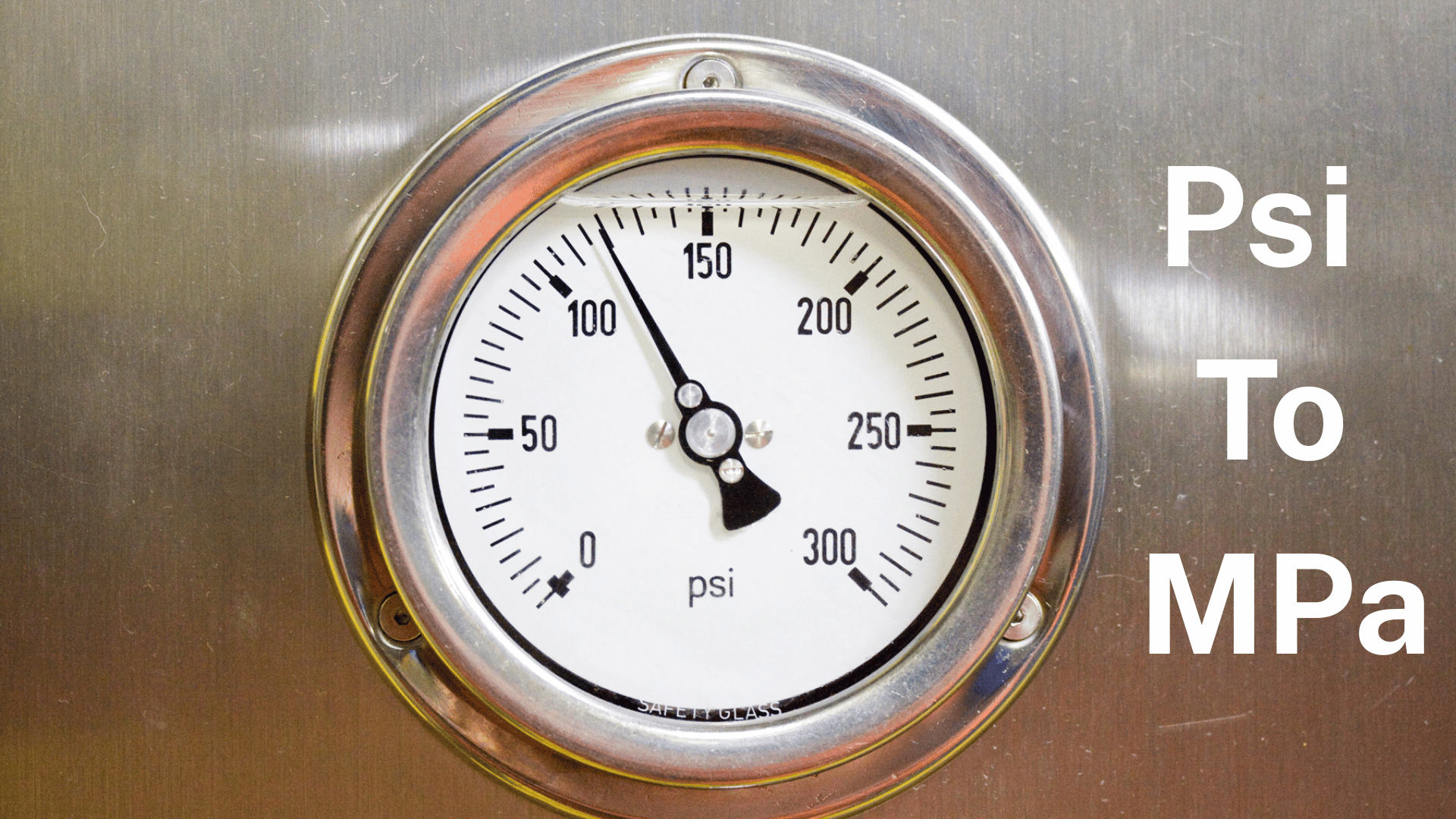
While the focus of this article is on converting MPa to PSI, it’s equally important to understand the reverse conversion: PSI to MPa. In many real-world scenarios, pressure data may be provided in PSI—especially in the United States—and engineers or technicians working in SI-based systems must convert those values to MPa.
Understanding both directions of conversion improves accuracy, flexibility, and global collaboration in engineering practices.
Reverse Conversion Formula:
Or alternatively:
This formula lets you convert any PSI value into megapascal accurately and reliably.
Step-by-Step Example 1:
Convert 1000 PSI to MPa
✅ Final result: 1000 PSI ≈ 6.895 MPa
Step-by-Step Example 2:
Convert 200 PSI to MPa
✅ Final result: 200 PSI ≈ 1.379 MPa
Why This Reverse Conversion Matters
-
Global Product Use: A product manufactured in the U.S. might have PSI markings, but it’s installed in a country using MPa.
-
Code Compliance: Some international standards specify pressure limits in MPa, even if field instruments read PSI.
-
Import/Export Validation: Engineers validating imported equipment must ensure compliance by converting PSI to MPa.
Quick PSI to MPa Conversion Table
| PSI | MPa |
|---|---|
| 100 | 0.689 |
| 250 | 1.724 |
| 500 | 3.447 |
| 750 | 5.171 |
| 1000 | 6.895 |
| 2000 | 13.790 |
| 3000 | 20.684 |
| 5000 | 34.474 |
| 10000 | 68.948 |
Use this table for quick reference during design reviews, system commissioning, or field inspections.
MPa to PSI vs PSI to MPa
| Direction | Formula | Common Use Case |
|---|---|---|
| MPa to PSI | MPa × 145.0377377 | Equipment designed in MPa but PSI gauges |
| PSI to MPa | PSI × 0.00689476 | U.S. devices used in SI environments |
By mastering both directions, engineers can switch between systems with ease and eliminate costly conversion errors.
Frequently Asked Questions (FAQs)
To help clarify common doubts around pressure unit conversion, here are some of the most frequently asked questions related to MPa to PSI:
1. What is the exact conversion factor from MPa to PSI?
The most precise conversion is:
For most engineering applications, rounding to 145.038 PSI is acceptable.
2. Can I estimate MPa to PSI using a rough rule of thumb?
Yes. A quick estimate is:
This is useful for approximate field calculations, but always use the full conversion factor for engineering or safety-critical systems.
3. Why are there so many pressure units?
Pressure can be expressed in many ways depending on the region, industry, or historical context. The most common are:
-
MPa (megapascal)
-
PSI (pounds per square inch)
-
bar
-
atm (atmosphere)
-
kPa (kilopascal)
Globalization demands that engineers be fluent in converting between them—especially MPa to PSI and vice versa.
4. Are MPa and PSI interchangeable?
No. Although both measure pressure, they belong to different systems—MPa is metric (SI), while PSI is imperial. They are not numerically equal, so MPa to PSI conversion is always required when switching systems.
5. What is the pressure of 1 bar in MPa and PSI?
-
1 bar = 0.1 MPa
-
1 bar ≈ 14.5038 PSI
This is useful when comparing European specifications (often in bar) with American or global documentation.
6. Can I convert directly between PSI and kPa?
Yes. Since 1 MPa = 1000 kPa, and 1 MPa ≈ 145.038 PSI:
7. What if my equipment uses kg/cm² instead of MPa or PSI?
This is another common unit, especially in older or Asian-manufactured equipment.
Use a multi-unit conversion tool to convert between kg/cm², MPa, and PSI.
8. Do MPa and PSI measure absolute or gauge pressure?
Both units can express either gauge pressure (relative to atmospheric pressure) or absolute pressure (relative to a vacuum), depending on the context. Always check whether the reading is MPa(g) or MPa(abs), and similarly for PSI.
9. Is PSI ever used in metric countries?
Yes. While metric countries officially use MPa, some industries—especially those involving imported U.S. equipment—still refer to PSI, especially for tools, tires, compressors, and service manuals.
10. What tools should I use for accurate MPa to PSI conversion?
-
Online calculators (like UnitConverters.net, CalculatorSoup)
-
Mobile apps for field use
-
Excel or Google Sheets for batch conversion
-
Scientific calculator with custom formulas
-
Printed reference charts for quick lookup
Conclusion
In today’s interconnected world, understanding how to convert MPa to PSI is no longer just a technical convenience—it’s a necessity. Whether you’re working on a global engineering project, calibrating pressure equipment, or ensuring compliance with international standards, the ability to move seamlessly between megapascal (MPa) and pounds per square inch (PSI) is vital.
Throughout this article, we’ve explored what MPa and PSI mean, how they relate, and why converting between them is so critical in fields like hydraulics, construction, automotive, aerospace, and oil & gas. You’ve learned the exact conversion formula (MPa × 145.0377377 = PSI), practical examples, and tools that simplify the process. We also addressed common errors to avoid, real-world use cases, international differences, and frequently asked questions—all to ensure you can confidently and accurately perform MPa to PSI conversions in any context.
Whether you’re in the office designing systems, in the field troubleshooting equipment, or in the classroom learning about fluid mechanics, mastering MPa to PSI conversion empowers you to work with clarity, precision, and global readiness.
Keep a calculator, reference table, or converter tool handy. And remember: small pressure miscalculations can lead to big consequences—so get the units right, every time.